

Greenland.
What I learned on a boat in a fjord.
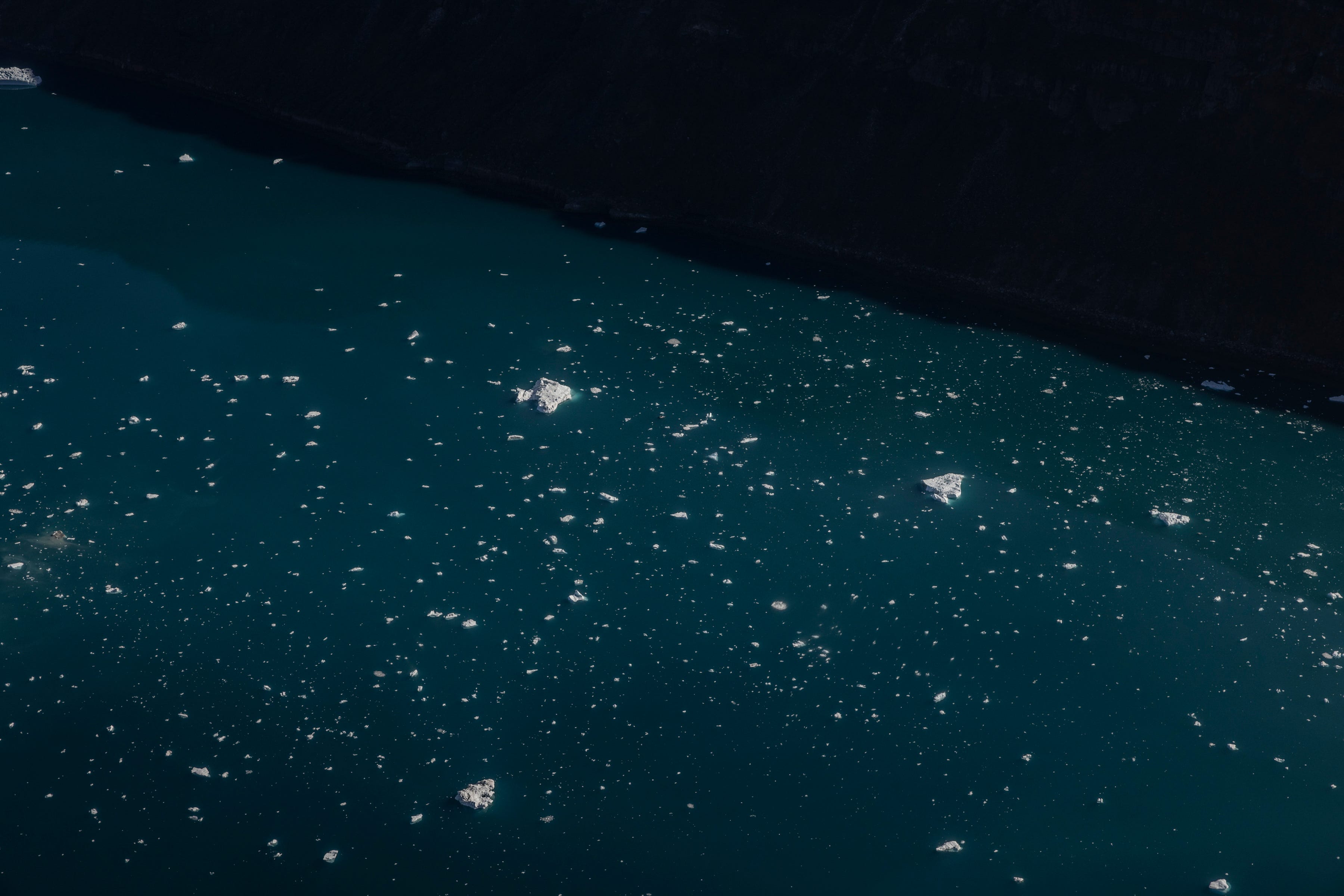
Once, I was on a boat with a woman named Ellen speeding through a fjord in South Greenland. It was early September, but the air was cold and I was wearing my thickest down coat. Ellen offhandedly mentioned something like “you know, like how we don’t have private land in Greenland.” No, I didn’t know that! I’m thrilled to know that! In fact, I couldn’t easily understand a place where no one owns the land. I had Ellen repeat it, and explain it. Her explanation jogged something loose inside me, a new possibility. I wrote about it in my book ‘Hot Springs’:
The entire country is uniquely managed: no one can own land in Greenland. All land can only be borrowed, with the terms of its use agreed upon cooperatively.
As an American, from a nation where a majority of land is privatized, it took me a while to understand how a place could have no landowners, how an entire country could be shared. I spoke with arctic social scientist Dr. Naja Carina Steenholdt, who explained, “It’s rooted in our vision of nature. It’s rooted in the perspective that we cannot own nature, that it can only be borrowed while we live. It’s rooted in very traditional, very Indigenous views of our nature. We still have that view.” Dr. Steenholdt emphasized that Greenland’s approach to land usage, while being connected to enduring philosophies, has a role in modernized life and can accommodate advancement, leading to a functioning society without landownership. Their society, she said, operates on principles of sharing everything: land, food, time, care.
Partway through making my book, which took me to over a dozen countries (USA, Mexico, Bolivia, Japan, Iceland, Hungary, Italy, Portugal, Switzerland, Turkey, India, South Africa, and, of course, Greenland) I realized that while I was initially motivated by a love of bathing culture, I was also trying to figure out some alternative ways to think about managing resources. Or even just new ways to think about the world. It’s easy to think our way of living and doing is the norm, but there’s so many norms all existing at once. How easy it is to forget all the possibilities!
I was traveling in a our post-Trump, Covid-altered, capitalism-riddled landscape; learning that Greenland is a place without privatized land, Mexico is a place with collective land management through the ejido system, Hungary is a place where doctors prescribe soaks in mineral-rich hot water (and it actually helps). Many of these places are defined by the presence of ancestors, folklore, nature.
Boy, does that feel different than what I am used to! It’s different from what I see in the news, in techno-dreams of the future, and in the chambers of political leadership. But these realities exist at the same time as book bans and the construction of yet another Dollar General. Now that Greenland is in the news, I know that both Americans and Greenlanders both feel scared of grasping threat of unwanted, unchecked imperialism. Maybe the antidote to the bully is learning about each other. Especially since Americanism has found it’s way into so many corners of the planet (how many Starbucks did I drive past on my way to a public bath?), I hope for a world where Americans can be the ones to consider what we can adopt from other places and people.
The challenge is that learning requires keeping our judgmental side in check. I eventually cut the following passage from my book, worried that readers would judge what they read. But it is an experience I still think about often.
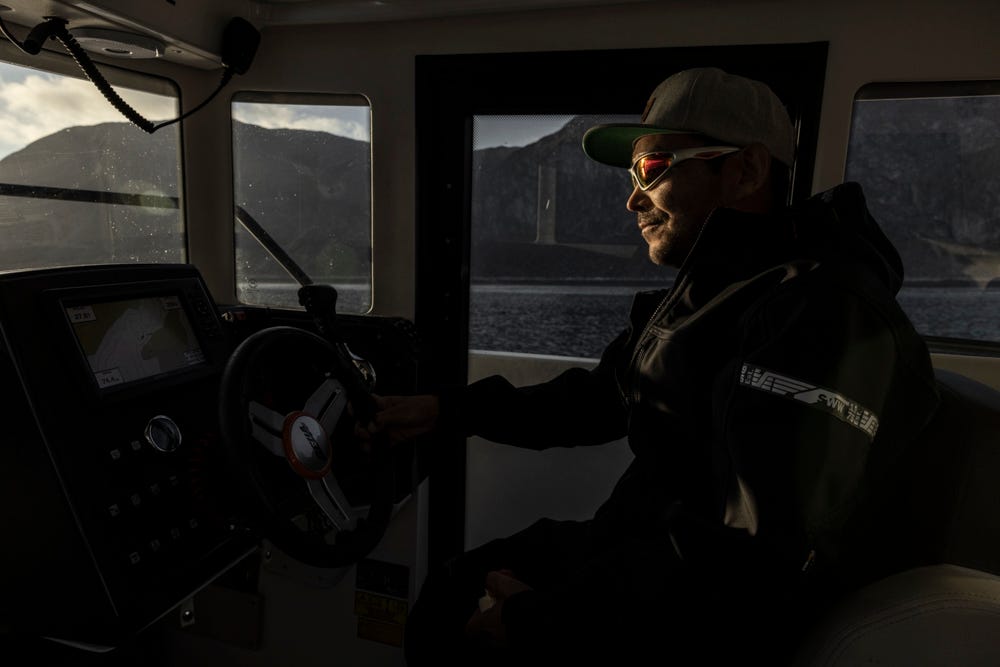
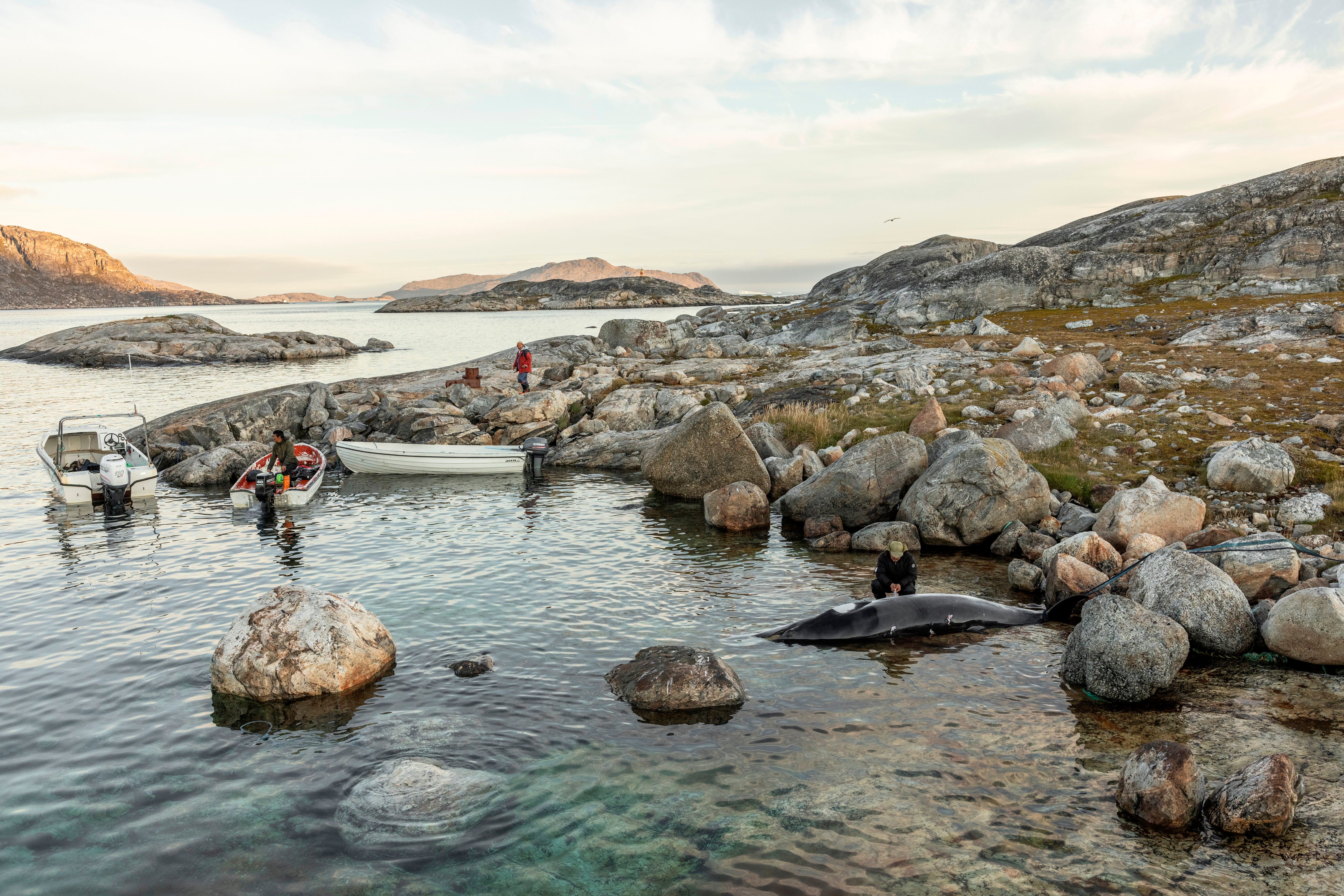
On the way back from the hot springs, the sun was setting and illuminating the mountains. It glimmered in Jens Stach’s sunglasses as he piloted his boat back to Nanortalik, where I stayed in a local hotel. He looked at me and smiled. “Want to see something cool?” I always say yes to that question. He swung past the harbor entrance and motored to a little cove where men ran up and down rocks and tugged on ropes. They’d had a successful day of hunting: two whales in the water. I clamored off the boat and the busy hunters paid me no mind while they trimmed blubber and meat. Later, as Jens took me back to the town docks, I said, “The hunters must be happy today.” And he replied, “We are all happy. Everyone in town will have whale for dinner tonight.”
What I later learned, by talking more with Jens and Dr. Steenholdt is that resources are automatically shared. Once the meat is divided, it will be delivered to every home in Nanortalik, likely starting with the homes of the sick, elderly, or otherwise in need. There are consequences for not sharing, but this social contract ensures that all bellies are full. This kind of egalitarianism felt so casual, it was usually without fanfare. It was expected to be kind. Traveling makes me thinking about the social contracts I am bound by. So many of them are bundled with power, money, individualism. It’s liberating to be in places, like Greenland, who show me a different way.
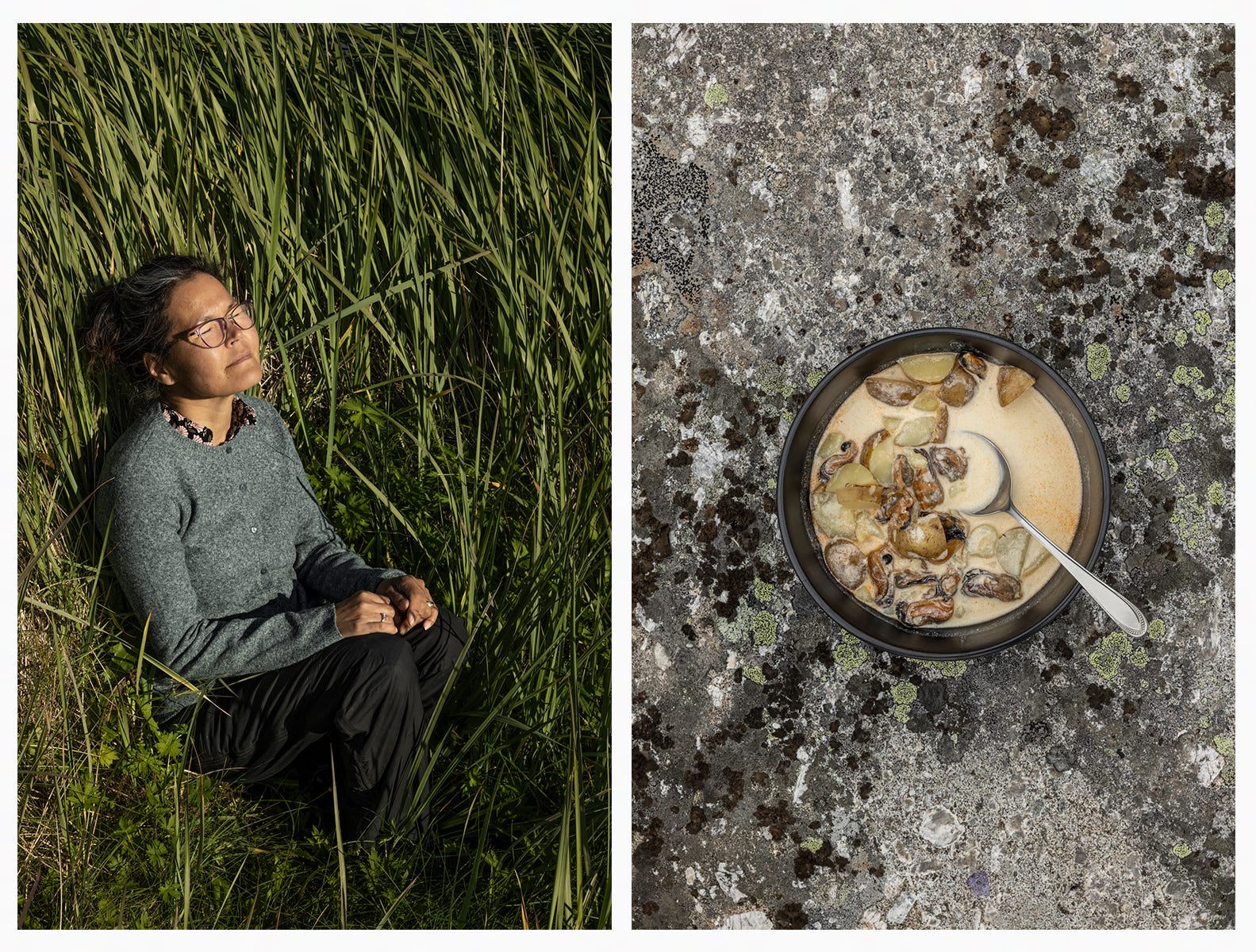
Earlier that day, I ate mussel soup in Nuunu Eli Olsen’s home in the nearest settlement, Alluitsup Paa. “If someone has a problem with a motorboat or something, we will always help,” said Nuunu. “It’s not like the scene in Dumb and Dumber when he said,‘ Watch my things,’ and the lady steals his things when he goes into a store.”
I saw a unique type of kindness everywhere in Greenland. When taxis were in short supply at the airport, a passenger paid for everyone to ride together. Without a word, another guest at the hotel in Nanortalik filled my teacup, remembering the type of tea I liked. A woman in town let me carry her heavy shopping bags to her home, without fuss or refusal. I realized I was witnessing a certain grace in both the offering and acceptance of kindness. “It’s actually not really customary to say thank you in Greenland,” said Dr. Steenholdt. “It’s just expected that we help each other. It’s just how we have to be; we have to help each other because we have such harsh surroundings. It’s always a give-and-take situation. Everybody contributes.”
[ You can find my book at your favorite bookseller and you learn more about it here. ]
I loved every word. Thank you for sharing your experience through story and image. ❤️
Absolutely lovely.