

Divinity.
And the courage to enjoy it.
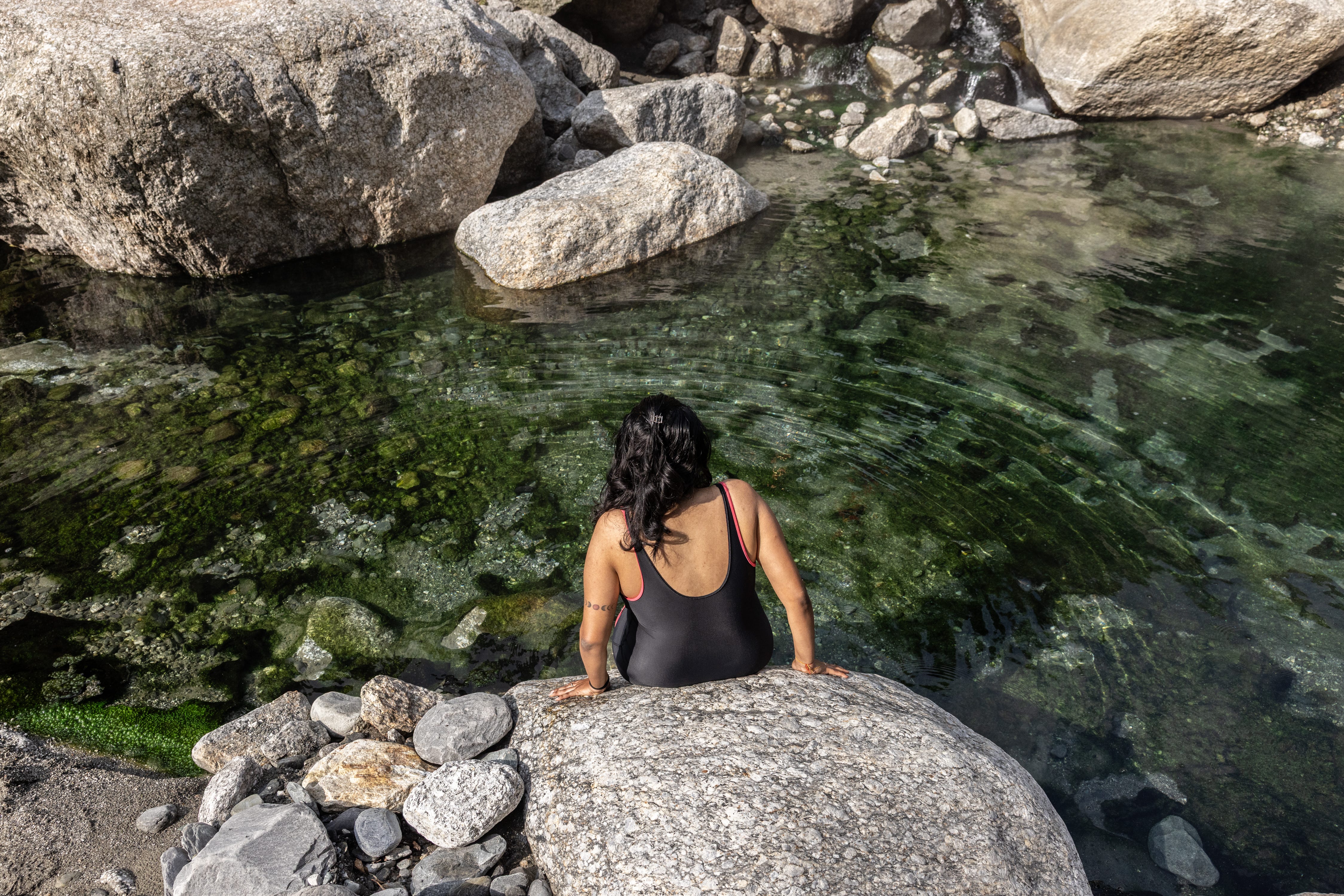
I once heard that there had been a sighting of Mother Mary in front of what is now a fitness studio in my old neighborhood. I’d trudge over in my leggings and sneakers to go exercise, past the spot where two sisters dropped to their knees at the feet of a holy apparition. It’s a pretty mundane place, partially a parking lot that spends much of the year taken over by piles of dirty snow.
I’ve been thinking about that when I listen to the new-ish Rosalia album, a religious experience in itself, a front-to-back no skips. It made me google the word reliquary (a container for holy relics) because that’s what it feels like. The internet went wild for it, at least in my algorithm, and everyone seems to agree that it’s a religious experience for people who disavow religion. My friend Grace in New York loves it, too, she says it taps into her identity as a lapsed Catholic. She told me about how on a work trip she met a man who cautioned her against it: are the religious undertones dangerous at a time like this?
When I was working on my book about hot springs, this tension between modernity and religiosity came up a few times. I can explain it best in an excerpt from about geothermal temples in India:
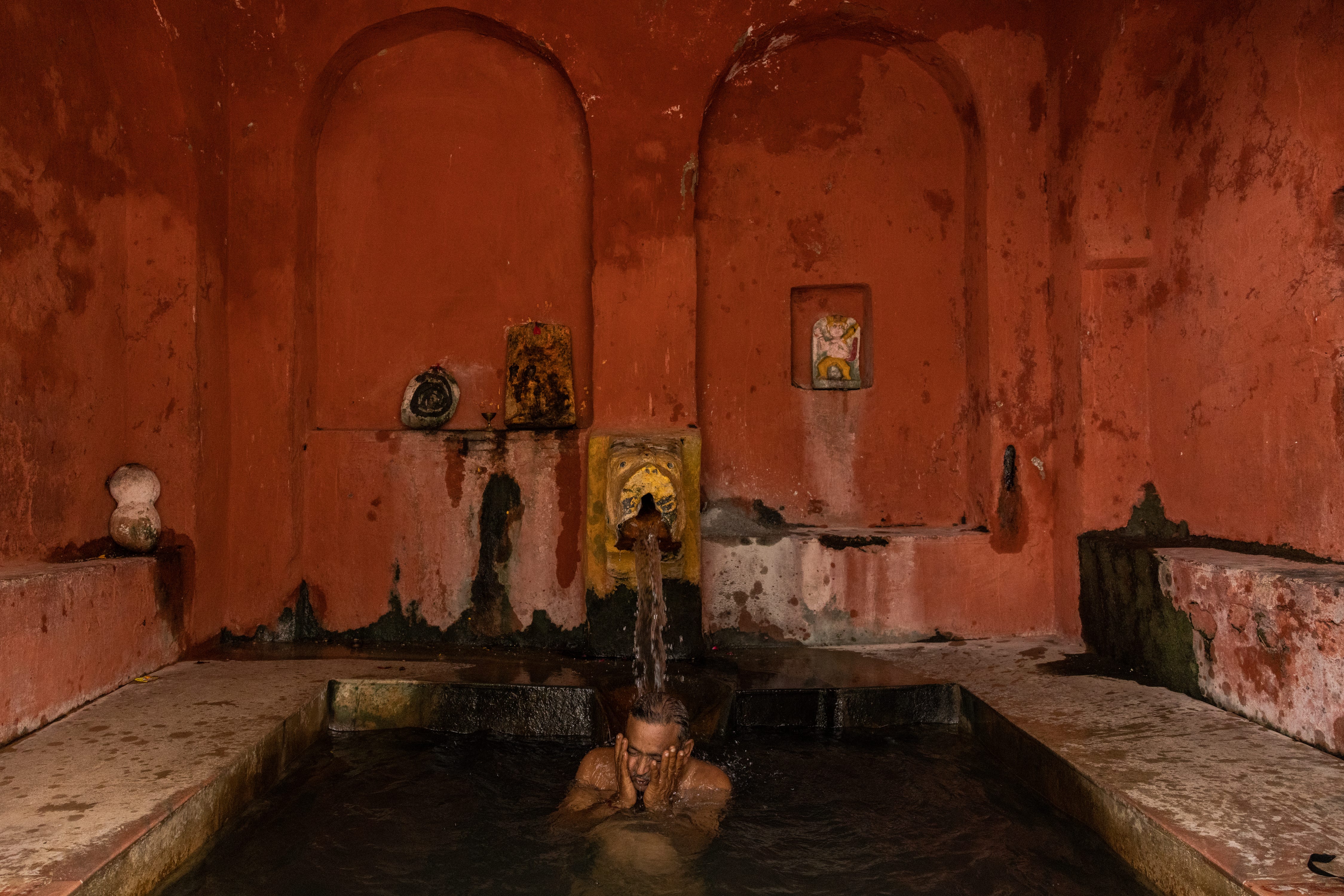
One day, I visited a hot springs pool at the edge of the Parvati River, where men came to bathe each morning. They washed their bodies and used toothbrushes to clean their teeth and the back of their throats until they retched. A middle-aged man in a red sweatshirt stopped to visit the holy men who tend a temple and garden just above the baths. “There is value in tradition and also in modernity, but too much of either makes an imbalance,” said the man in the sweatshirt, who grew up nearby. “Too much tradition is rigidity. Too much modernity makes one lose ethics. And one must have ethics. It falls from person to person to make sure they have balance, ethics, and connection beyond themselves and with nature.” We talked about Red Sweatshirt Guy and what he said for the rest of the trip, kicking ourselves for never exchanging names.
I put that part in bold, because I still think about it all the time. Much of adulthood feels like positioning myself at the sweet spot along many wide spectrums. I’m a pretty secular person, but I believe in the divine. Rosalia and Red Sweatshirt Guy and Björk (I’ll get to her in a moment) got me thinking about divinity, which is different from religion or even spirituality. It requires no thought, no striving, no study, no weekly attendance. It’s just like: wow, this world! Divinity is awe, an acknowledgement of mystery, or maybe even a lack of control. I usually feel it with nature and art- it’s an all-my-senses kind of thing. It’s usually quite simple.
I’ve had the feeling that I’ve been thinking about everything way too hard, too absorbed in my own head as if this world is figured out like a puzzle rather than absorbed like a sunbeam. Being human is the puzzle, divinity is the sunbeam.
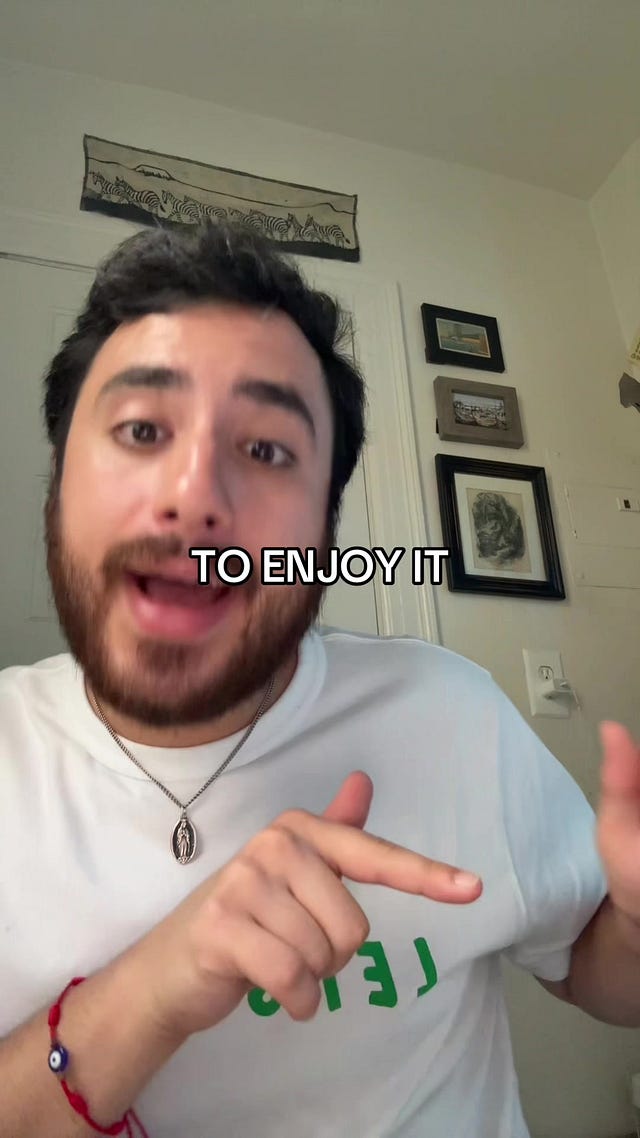
I’ve been a fan of Björk since I heard “Human Behavior” from the queasy back of the cross country van in high school. Her 1993 hit “Big Time Sensuality” just took a spin around social media. In one clip, a listener accentuates the lyrics:
It takes courage, to enjoy it.
The hardcore and the gentle.
(Although, it’s Björk, so it’s more like “it takes coo-hoo-ra-hage, to en-jo-ho-hoy it!”)
The top comment: “she was warning Gen Z to let go or irony and embrace earnest emotions.” Björk, famously in touch with her creativity and rage, is letting us know that it will take bravery to navigate the huge spectrums within a human life and choose some semblance of fun and fulfillment within it. It’s a reminder to occasionally audit my generation’s culture: how shaped I am by technology, that sense of doom coming to fruition again and again, trends, famous people, money, social media, etc, etc, etc, and on and on. Where the fuck is the divinity? (It takes courage. To enjoy it.)
 Tiktok failed to load.
Enable 3rd party cookies or use another browser
I’ve long been chalking up certain photographs I take to the whims of “the Photo Gods.” Someone walking into frame at the right moment. Wind picking up a strand of hair. A flock of birds. Clouds parting. The Photo Gods usually reveal themselves in the sun and clouds, I can’t control them or earn them. There’s no YouTube tutorial or photo podcast that will be my guide, I just have to be out in the world and receptive to it. A disciple to a fickle world. And, of course, sometimes the Photo Gods rebuke me, smiting me with florescent lights, transition lenses, assignments that feel like an uphill road.
There’s a reason why the Rosalia album has felt like such a cultural need. It reverses a lot of current hallmarks: humility rather than bravado, an orchestra over AI, spiritual love more than romantic entanglement. In Memoria, she sings in Portuguese (translated here):
Tell me if I still stumble
If I’m joyful, if I’m grateful
Or if I still know how to sing
Remind me, please
Of something, whatever it is
That I can’t remember
The first time I heard this song, it had me stopped in my driveway, sitting in my car until the next song, Magnolias. It made me think of my dad. And how quickly I move on from my questions to answers. How maybe it’s helpful to create and to destroy, to have some scrupulousness around what I renew from tradition or accept from modernity. Like, considering a modern sabbath or reading old books. I think there is something we are all trying to collectively remember together. And a part of me worries that wondering out loud makes me susceptible to something dopily dangerous, like the woo-woo world of grifters or some hovering cult of conspiracy. But there’s no harm in recognizing the divine when it happens, believing in something intangible, or finding out if it’s possible to look backward and forward at the same time.
GRETAAAAA ❤️
Great read